Quick answer
- Body composition describes the different tissues that make up your body, particularly fat mass and fat-free mass, which includes muscle, bone, organs and body water.
- Nutrition and physical activity can influence body fat, muscle development and overall health. Genetics and individual fat distribution also affect the shape your body naturally takes.
- Exercises that target a particular muscle group won’t reliably remove the fat directly over it. Abdominal exercises can strengthen your core, while broader exercise and nutrition habits influence changes in body fat.
- Weight management and body contouring are different. A person may want to change their overall weight, address a localised area of fat, improve muscle definition or discuss loose skin. Those concerns call for different considerations.
- Non-surgical body-contouring treatments aren’t substitutes for weight management, and results aren’t guaranteed. Suitability, evidence, potential complications and the exact treatment being offered all matter.
Your body shape is the result of several interacting factors, not a single diet, exercise or cosmetic procedure. Understanding those factors makes it easier to choose an approach that matches your actual goal rather than chasing a result that may not be realistic for your body.
What does body composition mean, and why does it matter?
Your weight tells you how much you weigh, but not what makes up that weight. Fat and muscle both contribute to the number on the scales, alongside bone, organs and body water. Two people at the same weight can therefore have quite different body compositions.
The term is useful because it separates several goals that are often treated as though they mean the same thing: losing weight, reducing body fat, developing muscle and changing the appearance of a particular area.
Body weight and body composition are not interchangeable
Scales measure total body weight. They don’t directly show how much of that weight comes from fat, muscle, bone or water.
A change on the scales therefore needs context. Someone who starts resistance training may develop muscle while losing fat, and their weight may change less than they expected. Equally, a short-term change in weight can reflect fluid fluctuations rather than a meaningful change in body fat.
Body-composition measurements can offer additional information, but their accuracy depends on the method used. No single measurement should be treated as a complete picture of health or appearance.
What influences your natural body shape?
Several factors work together:
- Genetics: inherited characteristics influence where your body tends to store fat and aspects of your natural build.
- Fat distribution: some people carry more subcutaneous fat around the abdomen, hips, thighs or flanks. Others store it in different areas.
- Muscle development: the size and development of different muscle groups affect body shape and definition.
- Age and hormonal changes: body composition and fat distribution can change over time.
- Nutrition and activity: eating patterns and physical activity can influence body weight, fat mass and muscle development.
- Health and medication: certain medical conditions and medicines can affect weight or body composition.
These influences don’t all operate in the same way, and you cannot change every one of them. A useful plan starts with the factors you can reasonably influence rather than treating your natural proportions as a problem that must be corrected.
Why do love handles remain when other areas change?
Love handles is the informal name for the fat around the sides of the waist, above the hips. This area is part of normal body-fat distribution, and its appearance varies between people.
A person may lose weight or become more active and still notice fat around the waist. That doesn’t automatically mean their efforts have failed. The amount and order of fat loss differ between individuals, and the body doesn’t allow you to choose precisely where fat is lost first.
Can you lose fat from your waist alone?
Not reliably through targeted exercises alone. Side bends, crunches and other core exercises train the muscles involved, but they don’t guarantee that the fat covering those muscles will disappear.
Exercise can help reduce abdominal fat, but that doesn’t mean a set of side bends will make the fat around your waist disappear. Studies look at different groups of people and use different exercise programmes, so their results cannot predict exactly how one person’s body will change.
Rather than focusing on one muscle group, look at your activity and eating habits as a whole. Core exercises still have a place: they build strength, even when they don’t produce the visible change you’re hoping for around your waist.
A useful distinction: strengthening the muscles beneath an area and changing the amount of fat over that area are related but different goals.
Can nutrition change your body composition?
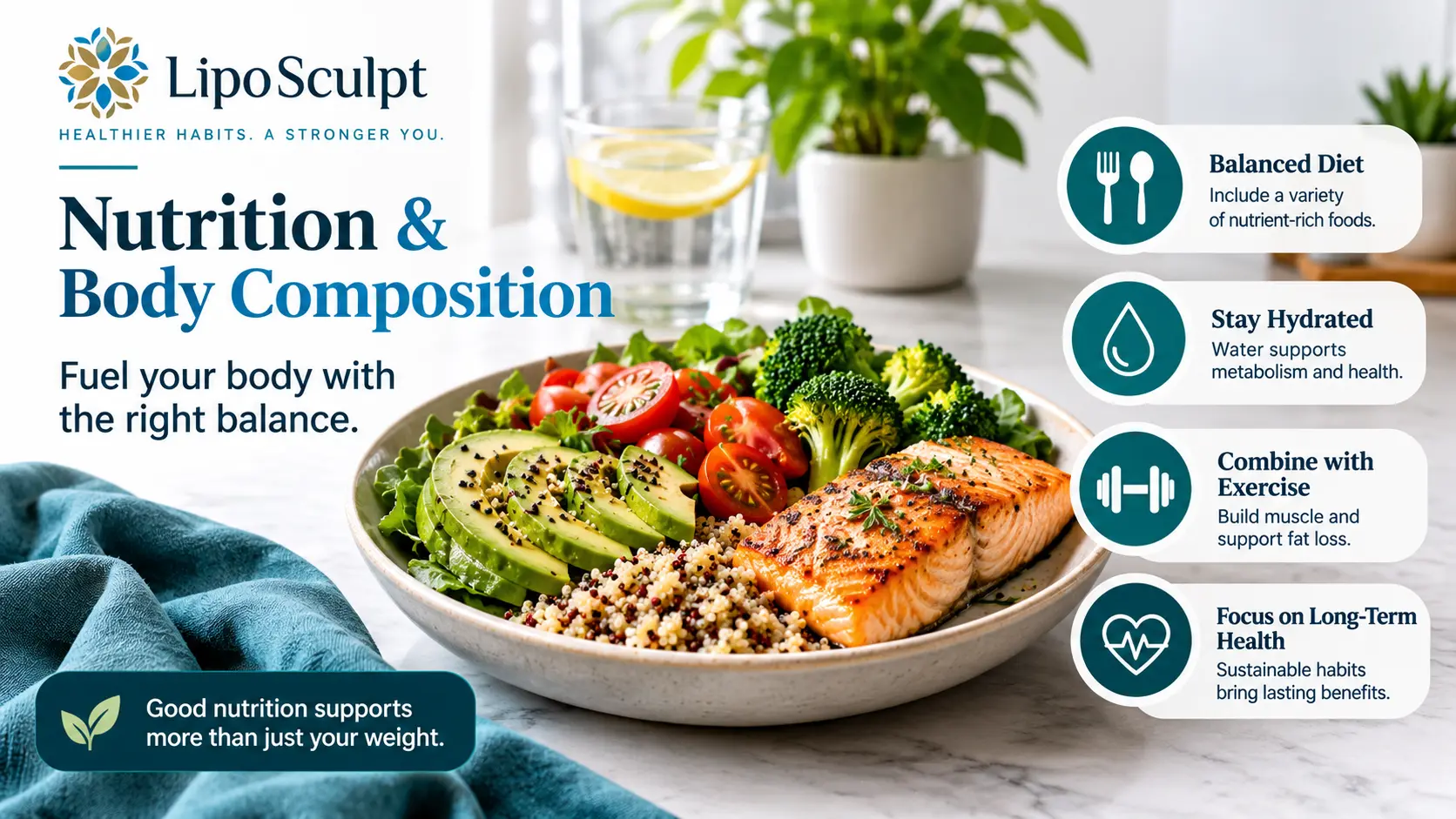
Yes. Eating patterns influence energy intake, while the balance and variety of foods you eat affect how well your diet supports everyday health and activity. The most useful approach is one you can maintain, rather than a restrictive plan built around a short deadline.
The NHS recommends a balanced diet that includes a variety of foods, with fruit and vegetables, higher-fibre starchy foods, protein sources and unsaturated fats in appropriate proportions. Individual needs vary, particularly where a medical condition or a history of disordered eating is involved.
Which eating habits are worth focusing on?
Start with the overall pattern rather than searching for one supposedly transformative food.
- Include protein-containing foods. Beans, lentils, eggs, fish, dairy products, tofu and other suitable sources can contribute to a balanced diet. Protein also supports the maintenance and repair of body tissues.
- Eat a variety of fibre-containing foods. Vegetables, fruit, pulses and wholegrain foods contribute fibre and help make meals more satisfying for many people.
- Pay attention to portions and overall intake. If weight loss is an appropriate goal, the amount eaten over time matters. Portion awareness can help without requiring every meal to become a calculation.
- Choose a pattern you can sustain. A plan that works around your schedule, preferences, budget and social life is generally more practical than one that depends on rigid rules.
- Make room for consistency rather than perfection. One meal doesn’t determine body composition. The broader pattern over time is more informative.
No particular food melts fat from the waist, and labelling foods as “fat-burning” can distract from the habits that matter more.
Do you need to cut out carbohydrates or follow a detox?
Not as a general rule. Carbohydrate-containing foods can form part of a balanced diet, and wholegrain options, potatoes and other starchy foods can provide useful nutrients. Whether a particular eating pattern suits someone depends on their needs and circumstances.
Detox teas, restrictive plans and products promising quick fat loss can sound appealing when you want to change your shape quickly. But a dramatic promise isn’t proof that a product works, and a plan that leaves you struggling to eat normally is unlikely to be a sensible long-term approach.
Pregnancy, certain health conditions and some medicines can affect your nutritional needs or weight. If any of these apply to you, or you’ve struggled with disordered eating, speak to a healthcare professional before making significant changes to your diet.
What kind of exercise supports body composition?
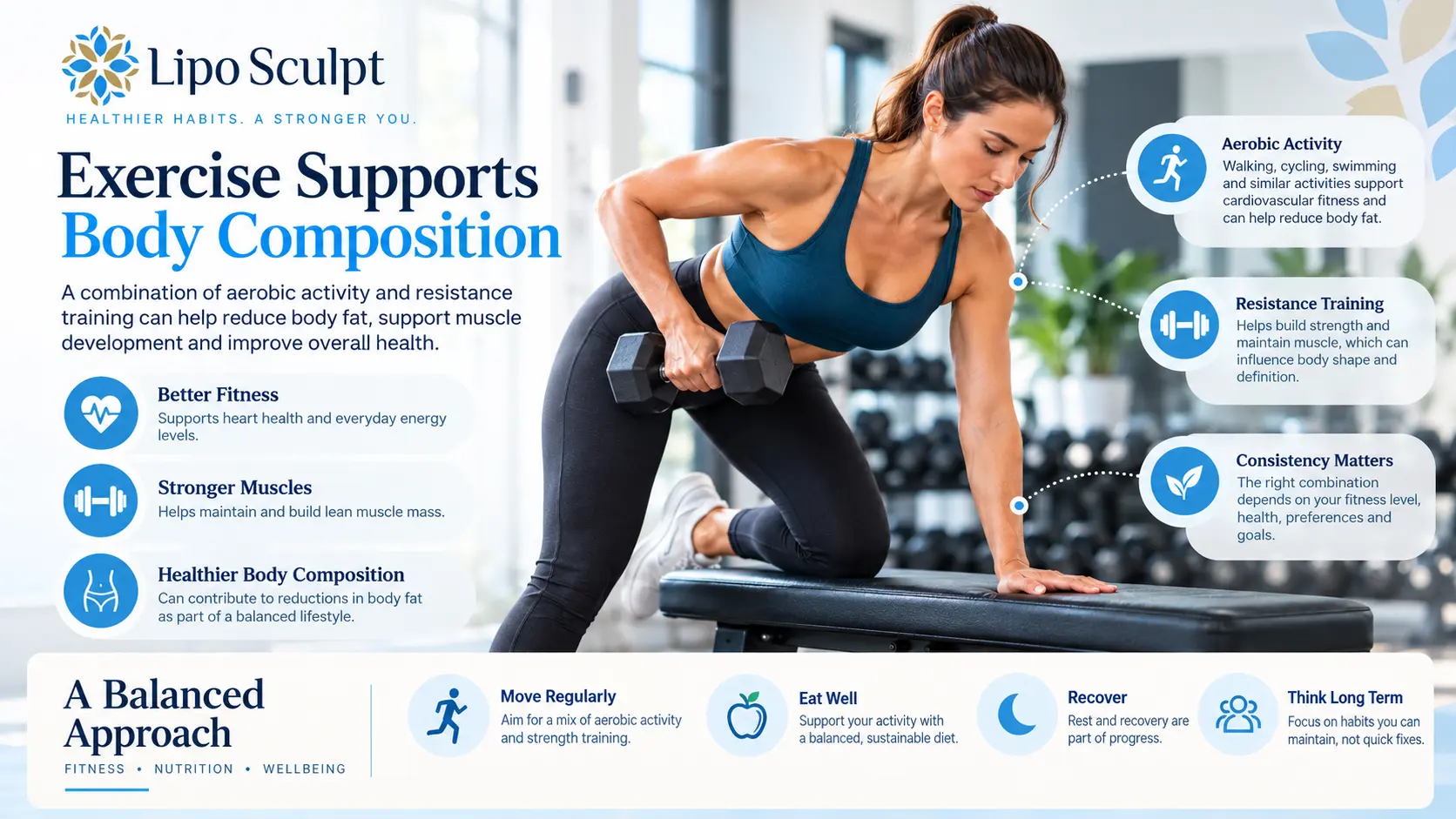
Walking, cycling and swimming get your heart and lungs working. Resistance exercises have a different job: they help build strength and maintain muscle. You don’t have to choose one over the other. The balance depends on your current fitness, health, preferences and what you want to achieve.
The NHS guidance for adults aged 19 to 64 recommends working towards at least 150 minutes of moderate-intensity activity a week, or 75 minutes of vigorous activity, alongside muscle-strengthening activities on at least two days. These are general public-health guidelines, not a personalised prescription or a guarantee of a particular appearance.
Check The Complete Guide on : Loose Weight, Not Skin From LipoSculpt Sutton
Aerobic activity and resistance training do different jobs
Walking briskly, cycling, swimming and other aerobic activities can help build fitness. Resistance training uses a suitable level of challenge to strengthen muscles; it can involve weights, resistance bands, machines or bodyweight movements.
Neither needs to be approached as punishment for eating. The appropriate starting point depends on current fitness, health, mobility and experience. Someone returning to activity after a long break may need a gentler progression than someone already exercising regularly.
| Approach | What it can contribute | What it cannot promise |
|---|---|---|
| Aerobic activity | Cardiovascular fitness and support for overall activity levels; it may contribute to reductions in body fat | Fat loss from one chosen body area |
| Resistance training | Muscle strength and development, which can influence body shape | Removal of the fat covering a specific muscle |
| Core exercises | Core strength, control and endurance | A guaranteed reduction in love handles |
| Balanced nutrition | Nutrient intake and, where appropriate, support for weight management | A particular body shape or a fixed rate of change |
| Cosmetic body contouring | A possible option for a specific concern, depending on the procedure and the person | General weight loss, guaranteed results or freedom from risk |
The most appropriate combination is the one that fits your goal and can be maintained safely. If you’re unsure where to start because of an injury, medical condition or prolonged inactivity, speak to a suitable healthcare professional.
How is weight loss different from body contouring?
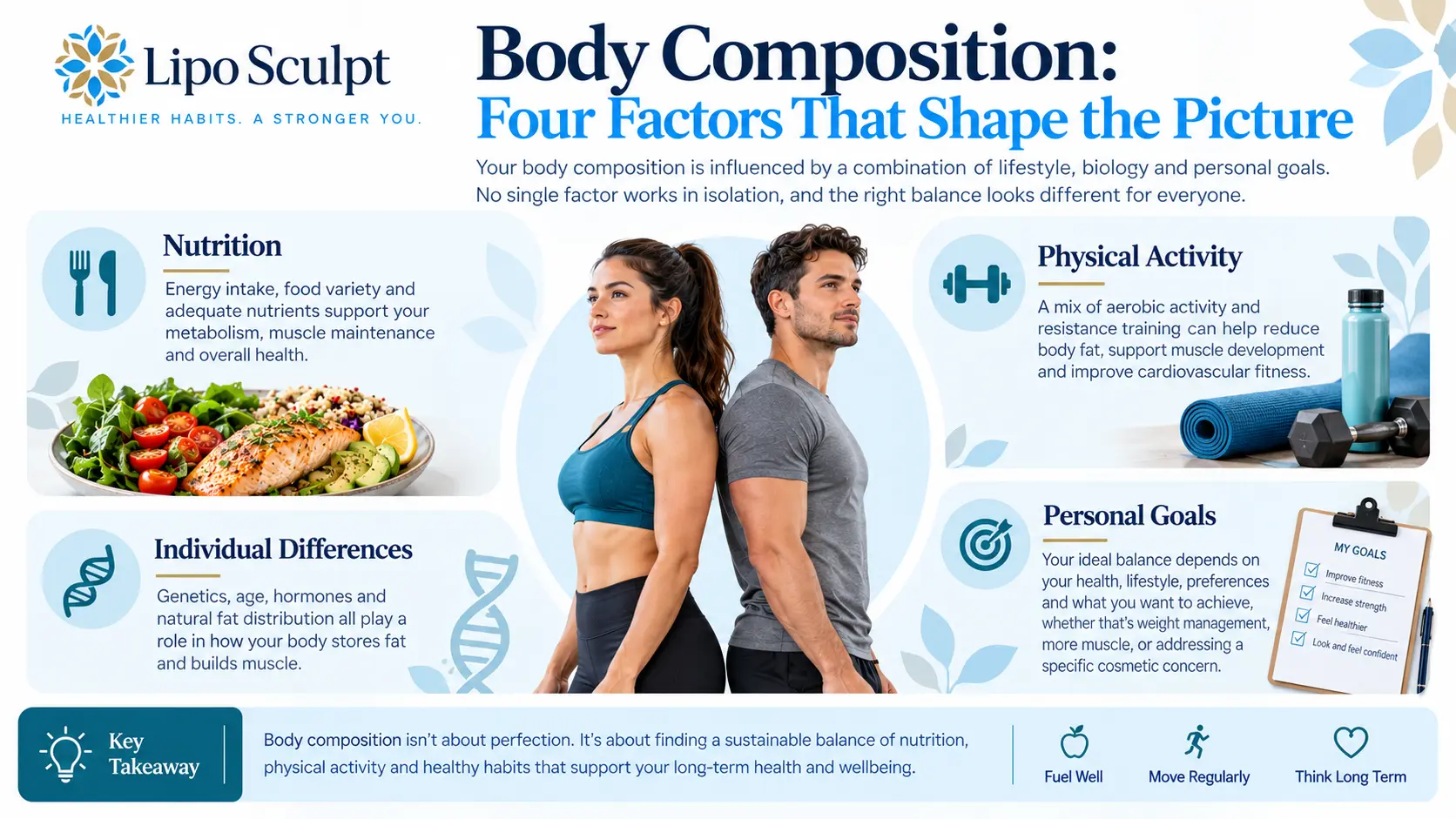
Weight management aims to address body weight and the factors affecting it. Body contouring, by contrast, refers to procedures intended to alter the appearance or shape of particular areas. The two can overlap in a person’s goals, but they are not interchangeable.
Someone who wants to improve general fitness or manage their weight may need a different approach from someone whose weight is relatively stable but who wants to discuss a specific area of localised fat.
Which goal best describes your concern?
| Your main concern | What to consider first |
|---|---|
| Overall weight management | Sustainable eating habits, activity and appropriate support if needed |
| Improving strength or muscle definition | A suitable resistance-training programme and adequate nutrition |
| Fat around the waist or hips | Overall body-fat changes, natural fat distribution and realistic expectations |
| Loose or less-firm skin | The cause, extent and nature of the skin change, assessed individually |
| A localised area that remains a concern | Whether it is fat, skin laxity or another issue, and whether any proposed procedure is suitable |
This distinction can save time and money. A procedure designed for a localised cosmetic concern is not a substitute for a broader weight-management plan. Likewise, exercise and dietary changes cannot be assumed to resolve every concern involving loose skin or body shape.
What can non-surgical body contouring achieve?
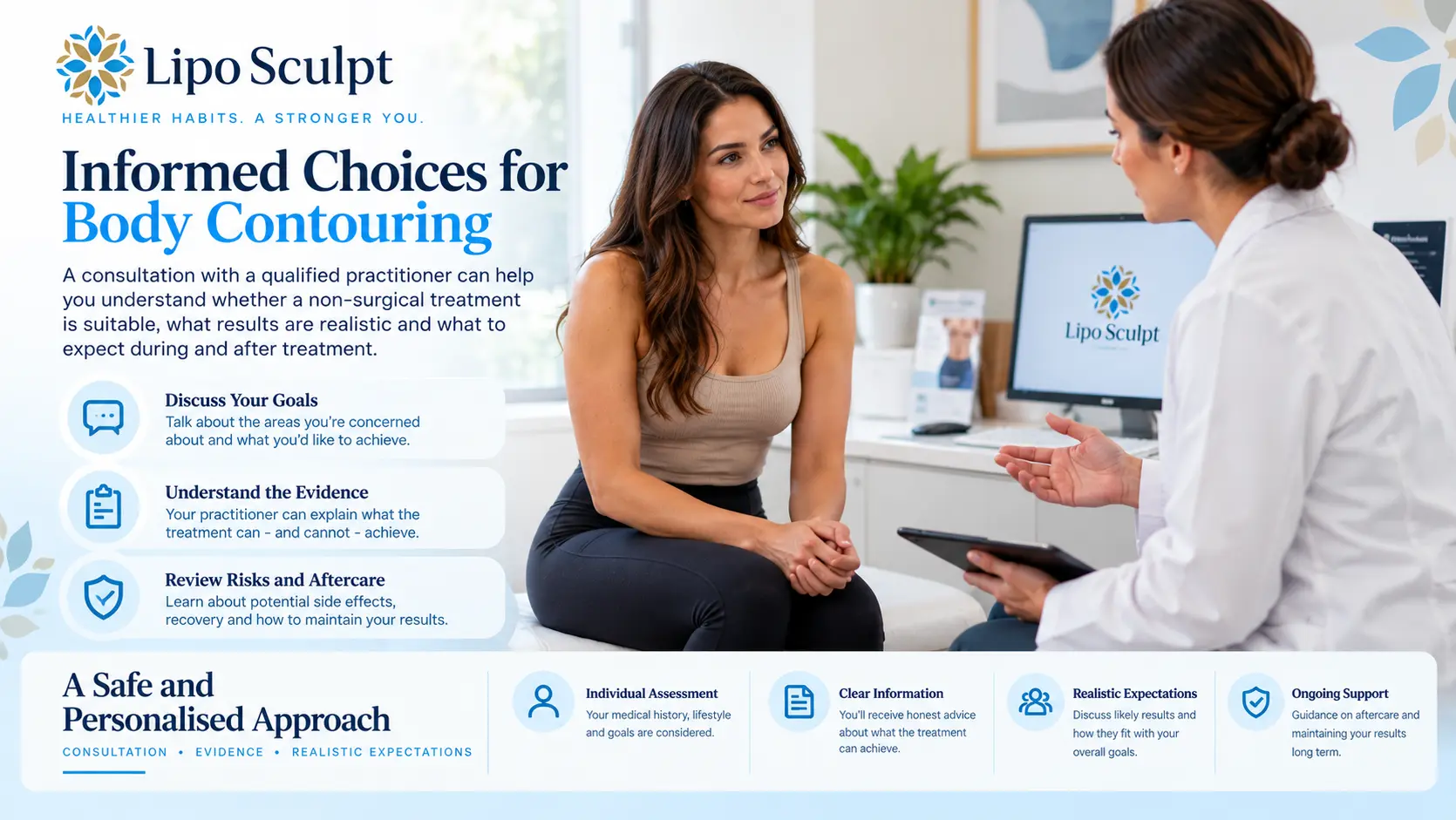
Non-surgical body contouring is a broad term for treatments intended to change the appearance of a particular area without conventional surgery. Different technologies and procedures work differently, and the evidence, limitations and risks cannot be treated as identical across the category.
Before considering a treatment, establish exactly what it is intended to address. A treatment proposed for localised fat may not be suitable for loose skin, and a procedure intended to affect muscle appearance is not necessarily designed to reduce fat. The name used in marketing isn’t enough to establish what a treatment can deliver.
How should you compare different treatments?
Start with the specific procedure, device or product being offered. Ask what evidence supports its claimed outcome, whether that evidence applies to the exact treatment, and what result is realistic for someone with your characteristics.
| Question | Why it matters |
|---|---|
| What is the treatment intended to change? | Fat, muscle appearance and skin laxity are different concerns. |
| What evidence supports the claimed result? | Results from one device or product cannot automatically be applied to another. |
| Who is suitable for it? | A practitioner should assess your circumstances rather than assume everyone is a candidate. |
| What are the possible complications? | Non-surgical does not mean risk-free. |
| What happens if the result is limited or a complication occurs? | Aftercare and access to appropriate help are part of the decision. |
| What is the full cost? | Include consultations, aftercare and any further treatment that may be proposed. |
The ASA and CAP expect advertisers to have evidence behind claims about how well non-surgical cosmetic treatments work. Their guidance also warns against advertising that plays on people’s insecurities or makes procedures seem trivial. If a treatment is promoted with a strong promise, ask what evidence supports that specific claim.
Before-and-after pictures deserve a closer look, too. Lighting, posture, camera angle and other details can affect how a result appears. A testimonial tells you about one person’s experience; it doesn’t establish the result you would get. Look for clear information about the treatment, its limitations and its risks rather than relying on pictures or endorsements alone.
Are non-surgical treatments suitable for everyone?
No. Suitability depends on the procedure, the area being treated, the person’s health and the expected outcome. A consultation should cover relevant medical history, the proposed method, possible complications, alternatives and what happens if the outcome is not as hoped.
It is also reasonable to decide against treatment. If the practitioner cannot explain the procedure clearly, dismisses your concerns, promises a guaranteed result or pressures you to book immediately, pause and seek further advice.
Check our before and after results from various non surgical treatment options from LipoSclupt Sutton
What if loose skin is the main concern?
Loose skin is not the same as localised fat. It can occur for different reasons, including changes in body size, ageing and changes in skin elasticity. The amount of looseness and the factors contributing to it vary from person to person.
Exercise can develop the muscles beneath the skin, but that does not mean it will remove excess skin. Similarly, a procedure discussed for localised fat should not be assumed to correct skin laxity unless there is suitable evidence for that specific claim.
Before choosing a procedure, get the concern assessed properly. Is the area affected by loose skin, localised fat, or a combination of the two? Those issues aren’t interchangeable, and a treatment aimed at fat may leave loose skin largely unchanged. You can also look for our tonesculpt program Sutton.
What results should you realistically expect?
There is no single body shape that can be promised through diet, exercise or cosmetic treatment. Results depend on the starting point, the approach taken, individual biology, consistency and, for procedures, the treatment itself and the person’s suitability.
It is also worth separating a change in appearance from a change in health. A person’s weight or waist measurement cannot, by itself, tell the whole story about their health, fitness or wellbeing.
Comparisons with celebrities, edited photographs or other people’s results can set an unhelpful standard. Differences in genetics, proportions, lighting, posing and image editing make those comparisons a poor way to judge what is achievable for you.
Decide what you actually want to change. It might be getting stronger, finding an exercise routine you can stick with, managing your weight, or asking a practitioner about one area that bothers you. A clear goal gives you a fairer way to judge progress than comparing your body with someone else’s.
How long will it take to see a change?
There is no reliable timeline that applies to everyone. Changes in fitness, strength, body weight and appearance may occur at different rates, and short-term fluctuations do not always reflect lasting changes in body composition.
Be cautious of plans that promise a precise amount of fat loss in a fixed period or use a holiday, event or deadline to pressure you into a decision. If you’re considering a cosmetic procedure, ask the practitioner what the recovery period and likely progression look like for that exact treatment, including the uncertainty around the result.
What should you ask before booking a body-contouring treatment?
A proper consultation should leave you with a clear understanding of the proposed procedure, its limitations and the alternatives. The NHS advises people considering cosmetic procedures to research the treatment, check the practitioner’s qualifications and experience, understand risks and aftercare, and take time to decide.
Before committing, ask:
- What exactly is the procedure, device or product being used?
- What is it designed to change, and what will it not address?
- What evidence supports the expected outcome for this particular treatment?
- Am I a suitable candidate, considering my health and the area I want treated?
- What are the common complications and other significant risks?
- What recovery, aftercare or follow-up will I need?
- Who should I contact if I experience a complication or am unhappy with the result?
- What is the total cost, including aftercare and any additional sessions that may be suggested?
- Are there alternatives, including doing nothing for now?
You should have time to consider the answers without pressure. If you do not understand a risk or a claim, ask for a clearer explanation before making a decision.
Frequently asked questions
Can you improve body composition without losing weight?
Yes, it is possible for body composition to change without a large change in total body weight. For example, changes in fat mass and muscle mass can occur at the same time. The extent of any change depends on individual circumstances, and scale weight alone cannot show exactly what has changed.
Why do I still have love handles if I exercise?
Exercise can improve fitness and contribute to changes in body fat, but it cannot guarantee a particular waist shape. Genetics, fat distribution, nutrition, the type and consistency of activity, and individual differences all play a part.
Can body contouring remove loose skin?
Yes, it is possible for body composition to change without a large change in total body weight. For example, changes in fat mass and muscle mass can occur at the same time. The extent of any change depends on individual circumstances, and scale weight alone cannot show exactly what has changed.
Are non-surgical body-contouring treatments risk-free?
No. Non-surgical procedures can still carry risks and may produce results that differ from expectations. The risks vary by procedure, product, device and individual circumstances, which is why a qualified, informed consultation and appropriate aftercare matter.
Do crunches get rid of belly fat?
Crunches work the abdominal muscles, but they won’t necessarily remove the fat covering them. Regular exercise can help reduce abdominal fat as part of wider changes in activity and body composition, although the amount and location of fat loss differ from person to person.
Is body contouring the same as weight loss?
No. Body contouring describes procedures intended to alter the appearance of specific areas. Weight management addresses overall body weight and related habits or health needs. A localised cosmetic procedure should not be presented as a replacement for weight-management support.
Why do I still have love handles if I exercise?
Exercise can improve fitness and contribute to changes in body fat, but it cannot guarantee a particular waist shape. Genetics, fat distribution, nutrition, the type and consistency of activity, and individual differences all play a part.
Should I choose a treatment based on before-and-after photographs?
Use these pictures as supporting information, not as a promise of what you’ll look like. Check whether the person, treatment area and procedure are comparable to your situation, and ask whether the images were taken under similar conditions. You should also understand the evidence for the treatment and the risks involved before deciding.
References and further reading
- NHS — Eating a balanced diet
https://www.nhs.uk/live-well/eat-well/how-to-eat-a-balanced-diet/eating-a-balanced-diet/ - NHS — Healthy eating when trying to lose weight
https://www.nhs.uk/better-health/lose-weight/healthy-eating-when-trying-to-lose-weight/ - NHS — Physical activity guidelines for adults aged 19 to 64
https://www.nhs.uk/live-well/exercise/physical-activity-guidelines-for-adults-aged-19-to-64/ - Ermin et al. — Comparisons of calorie restriction and structured exercise on reductions in visceral and abdominal subcutaneous adipose tissue: a systematic review
https://pubmed.ncbi.nlm.nih.gov/34040197/ - Igarashi et al. — An exercise program to reduce abdominal visceral and subcutaneous fat in adults with overweight and obesity: a systematic review and meta-analysis of randomized controlled trials
https://pubmed.ncbi.nlm.nih.gov/41109785/ - Advertising Standards Authority / Committee of Advertising Practice — Cosmetic interventions: non-surgical procedures
https://www.asa.org.uk/advice-online/cosmetic-interventions-non-surgical-procedures.html - NHS — Choosing who will do your cosmetic procedure
https://www.nhs.uk/tests-and-treatments/cosmetic-procedures/advice/choosing-who-will-do-your-procedure/ - NHS — Before you have a cosmetic procedure
https://www.nhs.uk/tests-and-treatments/cosmetic-procedures/advice/before-you-have-your-cosmetic-procedure/
This article is for general information only. Before having a cosmetic treatment, speak with a suitably qualified practitioner about whether it’s right for you, the possible risks, the evidence behind the expected results and the aftercare involved.