Diastasis Recti: The Key Takeaways
The short answer
- Common during pregnancy: The growing uterus stretches the abdominal wall, and separation between the abdominal muscles is common.
- Recovery varies: The gap may become smaller after birth, but the extent of recovery differs from person to person.
- Exercise can help: Appropriate exercises may improve abdominal strength and function, but no single routine guarantees that the gap will close.
- Support bands have limits: A band may provide comfort or support while worn; it does not repair the separated connective tissue.
- Know when to seek help: Persistent pain, functional difficulties or a concerning abdominal bulge warrant medical assessment.
- Treatment depends on your needs: Physiotherapy may be appropriate, while surgery is considered in selected cases after assessment.
Pregnancy puts the abdominal wall through changes it has never experienced before. As your baby grows, the tissue between the two long muscles at the front of your abdomen stretches. After birth, that tissue gradually adapts, but the separation does not always return to its previous state.
This is known as diastasis recti Sutton, or abdominal muscle separation.
You might notice a ridge running down the middle of your stomach when you sit up. Perhaps your abdomen feels different when lifting your baby, or the gap is still visible months after delivery. You may also have no symptoms and discover the separation during an examination.
Once you notice abdominal separation, it is natural to wonder what you could have done differently and what might help now. Perhaps you are questioning your exercise routine during pregnancy. Maybe someone has recommended a belly band, or you have been looking into dietary changes. If the gap is still there months after delivery, you may be wondering whether it can improve at all.
Pregnancy stretches the abdominal wall, and the changes don’t always reverse completely after birth. You may feel stronger as the weeks pass and still notice a gap down the middle of your abdomen. That doesn’t automatically mean your recovery has gone wrong. Rehabilitation can help you regain strength and control, although the amount of change varies from person to person. Some women also prefer wearing an abdominal support band for comfort during everyday tasks. It is an aid, not a treatment for the separation itself. Nutrition belongs in the recovery picture as well, but there is no established food or supplement that closes the gap.
There is more to consider than the gap itself. During pregnancy, the question is how to stay active safely. After birth, it becomes a matter of recovery, comfort and returning to the activities you enjoy. A support band may be useful for one purpose and unnecessary for another. And if the separation persists, you need to know when home management is reasonable and when a clinician should examine it. The sections below work through those decisions in turn.
The aim is straightforward: to help you make informed decisions without unnecessary restrictions, unrealistic promises or pressure to achieve a particular abdominal appearance by a fixed date.
At a glance: what matters most?

| Your question | The practical answer |
|---|---|
| Can diastasis recti be prevented? | No method guarantees prevention. Appropriate physical activity supports general health but cannot guarantee that separation will not develop. |
| Does exercise help? | Structured exercise may reduce the measured gap in some circumstances. Results vary, and a smaller gap does not necessarily mean that symptoms or function have improved. |
| Do belly bands work? | They may provide temporary external support. They are not established as a reliable stand-alone treatment for abdominal separation. |
| Does nutrition make a difference? | Adequate nutrition supports general health and normal tissue function. No particular food or supplement has been shown to repair the separation on its own. |
| Will the gap close after birth? | It often improves, but the amount and timing vary. Persistent symptoms or concerns deserve assessment. |
| Does everyone need treatment? | No. Treatment depends on symptoms, function, personal goals and clinical assessment. |
| Is surgery inevitable? | No. Many women do not need surgery. Selected cases may warrant a surgical consultation. |
1. What is diastasis recti, and why does it happen during pregnancy?
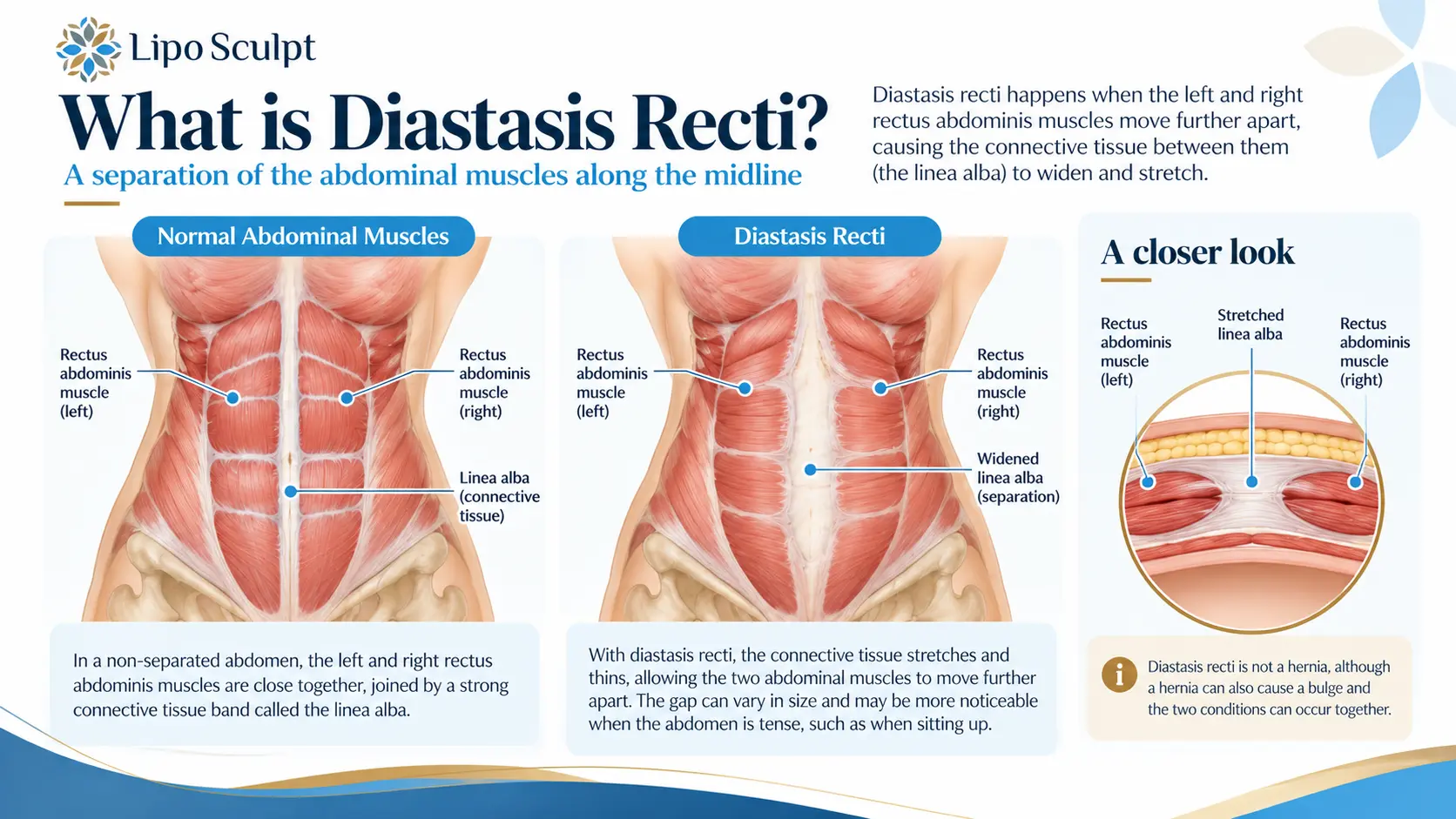
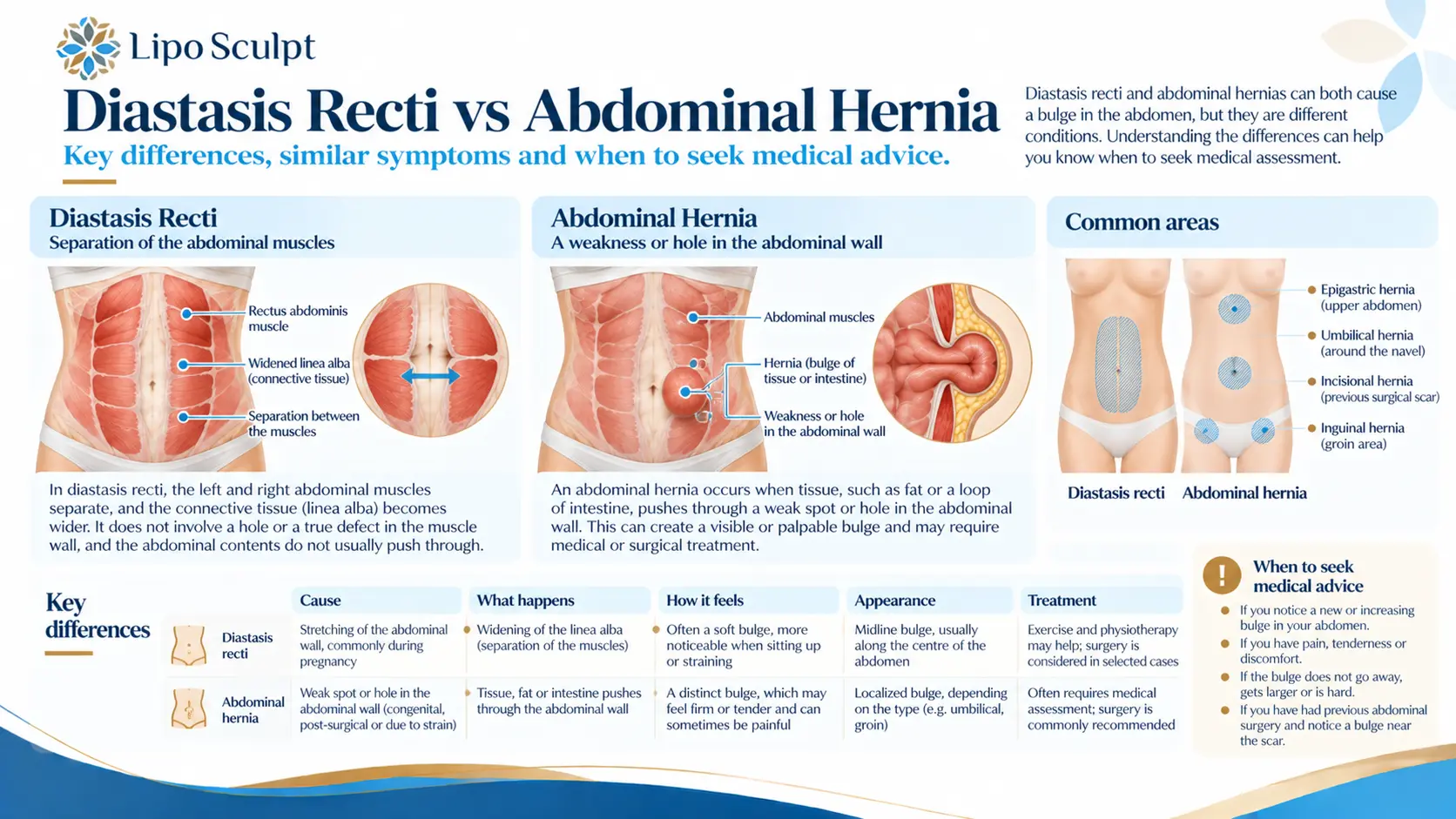
Two muscles called the rectus abdominis run vertically down the front of your abdomen. They are joined along the middle by a band of connective tissue called the linea alba.
As your uterus grows, the abdominal wall stretches to accommodate pregnancy. The linea alba lengthens and changes under this mechanical load, increasing the distance between the muscles in some women. When that separation is greater than usual, it is called diastasis recti, also known as divarication of the recti.
It is not automatically a tear in the abdominal muscles. It is a change in the separation and connective tissue between them.
Diastasis recti is also different from an abdominal hernia. A hernia involves tissue protruding through a weakness or defect in the abdominal wall, although a hernia and diastasis recti can occur together.
What might you notice?
The condition does not look or feel the same for everyone.
| What you notice | What it may indicate |
|---|---|
| A ridge or dome down the middle of your abdomen when sitting up | The abdominal wall is changing shape during movement. This alone does not establish the severity of separation. |
| A softer-feeling abdomen after birth | You may be noticing changes in abdominal function, although this sensation alone cannot diagnose diastasis recti. |
| A persistent gap or bulge | Separation may remain, but a clinician may need to rule out other causes of a bulge. |
| Difficulty with certain movements | You may benefit from an assessment of abdominal function and other contributing factors. |
| No noticeable symptoms | Separation can be present without causing substantial discomfort or difficulty. |
The width of the gap is only one part of the picture. A measurement cannot, by itself, tell you how well your abdominal wall functions, whether you need treatment or what your recovery will look like.
One woman may have a measurable gap without significant functional problems. Another may need help with discomfort, movement or returning to exercise. This is why symptoms and function matter alongside appearance.
Check our before and after results from hifu treatment Sutton.
Is diastasis recti normal during pregnancy?
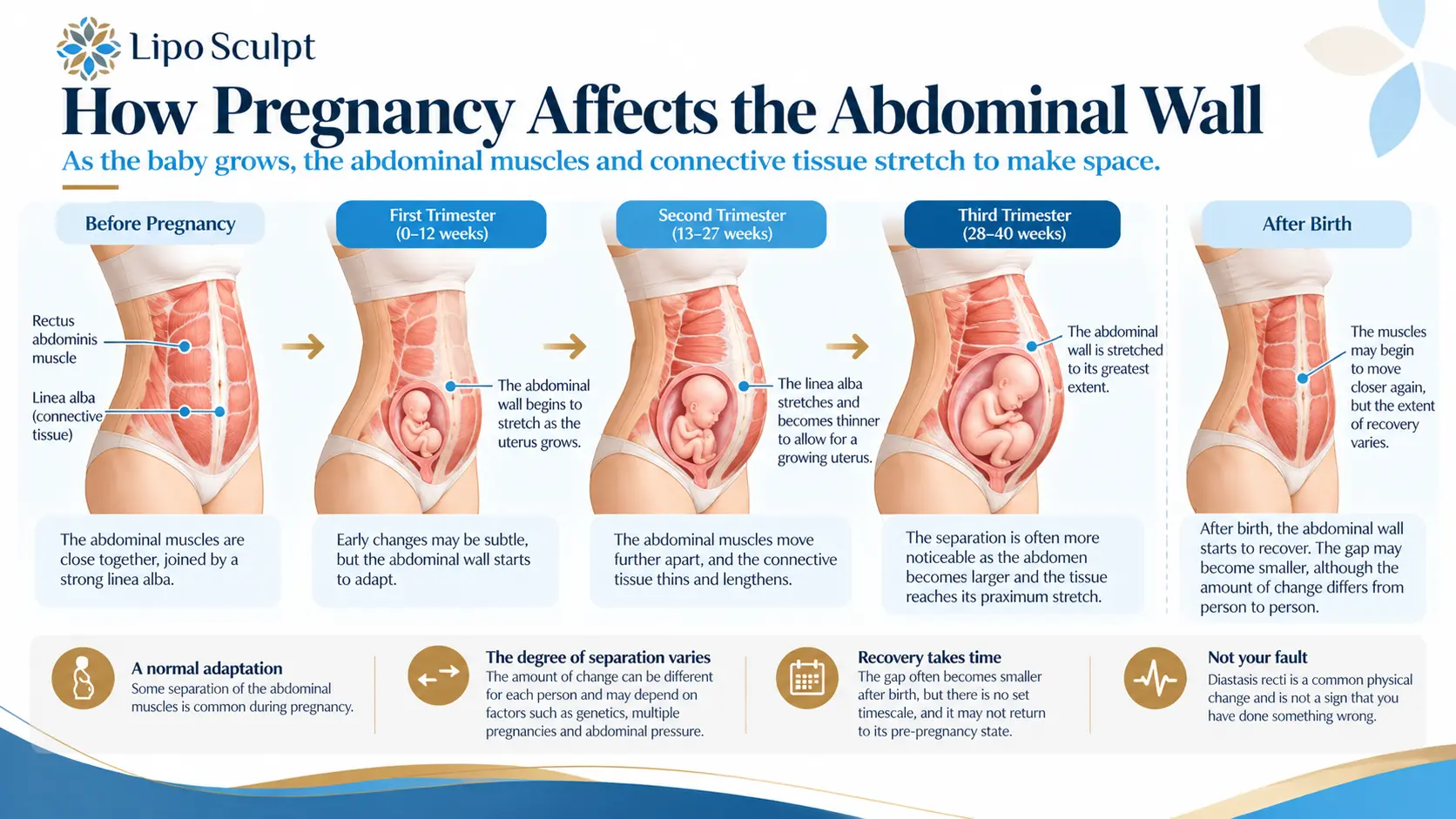
Abdominal separation is common during pregnancy. The growing uterus places increasing demands on the abdominal wall, and the degree of separation varies between individuals.
Developing diastasis recti does not mean that you did something wrong. It is not proof that you exercised incorrectly, lifted something once, ate the wrong food or failed to strengthen your core.
Nor does it automatically mean that you need treatment. What matters is whether the separation persists, whether you have symptoms and whether those symptoms affect your daily life. To know more , you can book a consultation with Our Sutton team.
2. Can you prevent diastasis recti before or during pregnancy?
There is no guaranteed way to prevent abdominal separation.
Appropriate physical activity during an uncomplicated pregnancy supports general health, cardiovascular fitness and physical function. However, these benefits should not be confused with proof that exercise will stop the linea alba from stretching.
The same caution applies to belly bands, specific foods and supplements. None should be presented as a reliable prevention strategy for diastasis recti.
A sensible approach is to:
- Stay physically active within the limits of your pregnancy and medical advice.
- Choose activities that suit your existing fitness and comfort.
- Eat a varied diet that meets your nutritional needs.
- Adapt movements when they become uncomfortable or difficult to control.
- Ask your midwife, GP or physiotherapist for individual advice if you have medical concerns or need help modifying activity.
There is no need to monitor every movement out of fear that an ordinary activity might cause abdominal separation. Pregnancy changes the abdominal wall, and no lifestyle routine can guarantee a particular anatomical outcome.
3. Does exercise reduce the risk of diastasis recti?

This question needs a distinction between preventing separation during pregnancy and managing it after birth.
Exercise is valuable during pregnancy for many reasons, but evidence does not establish that a particular prenatal exercise routine reliably prevents diastasis recti.
Research into postpartum abdominal exercise has produced different results. Some studies have found a reduction in the distance between the rectus muscles after structured exercise, while others have not demonstrated a clear benefit for particular exercise approaches. Differences in the programmes, participants and measurements make the findings difficult to compare directly.
The research published in 2026 does not give one simple answer. In a review of 15 studies involving 803 women, only three studies could be combined in the main analysis. That analysis found no statistically significant difference in the gap between women doing transversus abdominis-focused exercises and those receiving minimal or no intervention. Other research has reported smaller gaps after exercise, but the results depend on the programmes studied and the outcomes measured. A change in the gap should not be assumed to mean that everyday function has improved by the same amount.
Taken together, these results do not establish that exercise is ineffective. They show that the effect depends on what is measured and which programme is studied. Exercise may still be worthwhile for strength, movement and individual symptoms, but women should not be promised that a particular routine will close the gap. The best approach is to set realistic goals and assess progress in terms of both abdominal function and symptoms.
Learn more about whether fat freezing Sutton at home can help you in this situation.
Three outcomes that should not be confused
| Outcome | What it measures | What it does not automatically prove |
|---|---|---|
| Anatomical change | Whether the measured distance between the muscles changes | That pain, movement or daily function has improved |
| Functional improvement | How comfortably and effectively you move, lift or exercise | That the gap has closed |
| Appearance | How the abdomen looks at rest or during movement | That the underlying connective tissue has been repaired |
A rehabilitation programme should reflect your goals. If your main concern is difficulty with everyday movement, the programme should address that function. If you are concerned about a persistent bulge, assessment can help establish whether it relates to diastasis recti or another condition.
Do not judge a programme solely by whether your abdomen looks flatter or the measured gap becomes smaller. Those may be relevant outcomes, but they are not the only measures of progress.
Worth Knowing: Lose the fat, but without loosening the skin from liposculpt Sutton, UK.
4. Which exercises are appropriate during pregnancy?
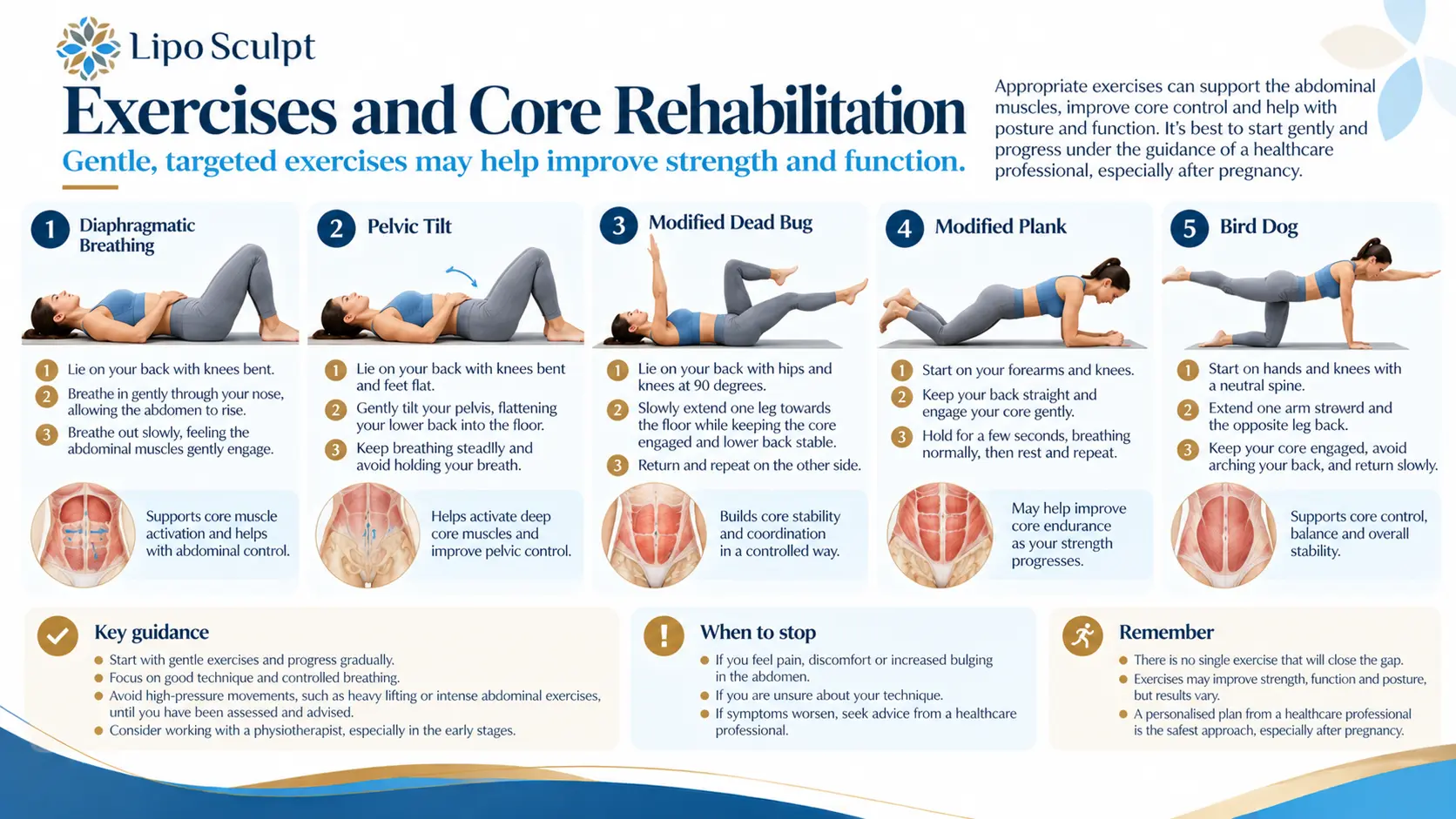
For most women without medical or obstetric contraindications, physical activity during pregnancy is encouraged. The type and intensity should reflect your health, existing fitness, stage of pregnancy and any advice from your maternity team.
Activities may include walking, swimming, appropriate strength-conditioning exercises and other forms of movement that you can perform comfortably and safely.
There is no need to turn every pregnancy workout into a diastasis recti prevention routine. The practical priority is maintaining suitable activity and adapting it when your body or medical circumstances require a change.
Should you avoid crunches, sit-ups and abdominal exercises?
It is not accurate to say that every abdominal exercise is automatically harmful or that every woman must permanently avoid crunches and sit-ups.
Equally, an exercise that causes pain, uncomfortable pressure or pronounced doming may need to be modified. During pregnancy, changes in comfort, balance and abdominal control can affect which movements feel appropriate.
After birth, exercise selection may need to be adjusted according to symptoms and recovery. A physiotherapist can help identify suitable starting points and progress the programme as your ability changes.
The aim is not to create a permanent list of forbidden movements. It is to find an appropriate level of activity and progress when your body is ready.
How should you manage lifting and everyday movement?
You do not need to avoid all lifting or bending to protect your abdominal wall.
Instead, pay attention to your comfort and ability to control the movement. Keep loads manageable, breathe normally during exertion and modify an activity if it produces pain or symptoms you cannot comfortably manage.
For example, rolling onto your side before pushing up from bed may feel more comfortable than sitting straight up. This is a practical movement option, not a proven method of preventing diastasis recti.
If an activity repeatedly causes discomfort or makes daily life difficult, seek individual guidance rather than assuming that you must either push through it or stop moving altogether.
When should you stop exercising during pregnancy?
Don’t push through warning signs during pregnancy. Stop exercising if you notice bleeding, chest pain or dizziness. A painful or swollen calf needs attention, too. So does fluid leaking from your vagina or contractions that keep coming at regular intervals. Contact your maternity team if any of these occur. If symptoms are severe, get urgent medical help. And if your pregnancy has complications, or your clinician has told you to limit exercise, check what activity is safe for you before carrying on.
Your maternity team can advise you about exercise restrictions or modifications if pregnancy complications or other medical conditions are present.
5. Does the type of birth affect abdominal separation?

Diastasis recti can develop during pregnancy before delivery, whether you later have a vaginal birth or a caesarean section. A caesarean birth does not prevent the abdominal wall from stretching during pregnancy.
The two types of birth can, however, involve different recovery considerations.
After a vaginal birth, you may need to recover from perineal discomfort or address pelvic-floor symptoms. After a caesarean section, recovery also involves an abdominal incision and healing of the tissues affected by surgery.
These differences can influence when and how you return to exercise. They do not mean that one delivery method inevitably causes more severe abdominal separation.
If you have had a caesarean section, follow your clinical team’s advice about wound healing, lifting and physical activity. Do not begin scar massage or a demanding abdominal programme until you have been advised that it is appropriate.
Seek medical assessment if you develop worsening pain, fever, wound redness, discharge or other concerning postoperative symptoms.
6. How does nutrition support abdominal health and recovery?
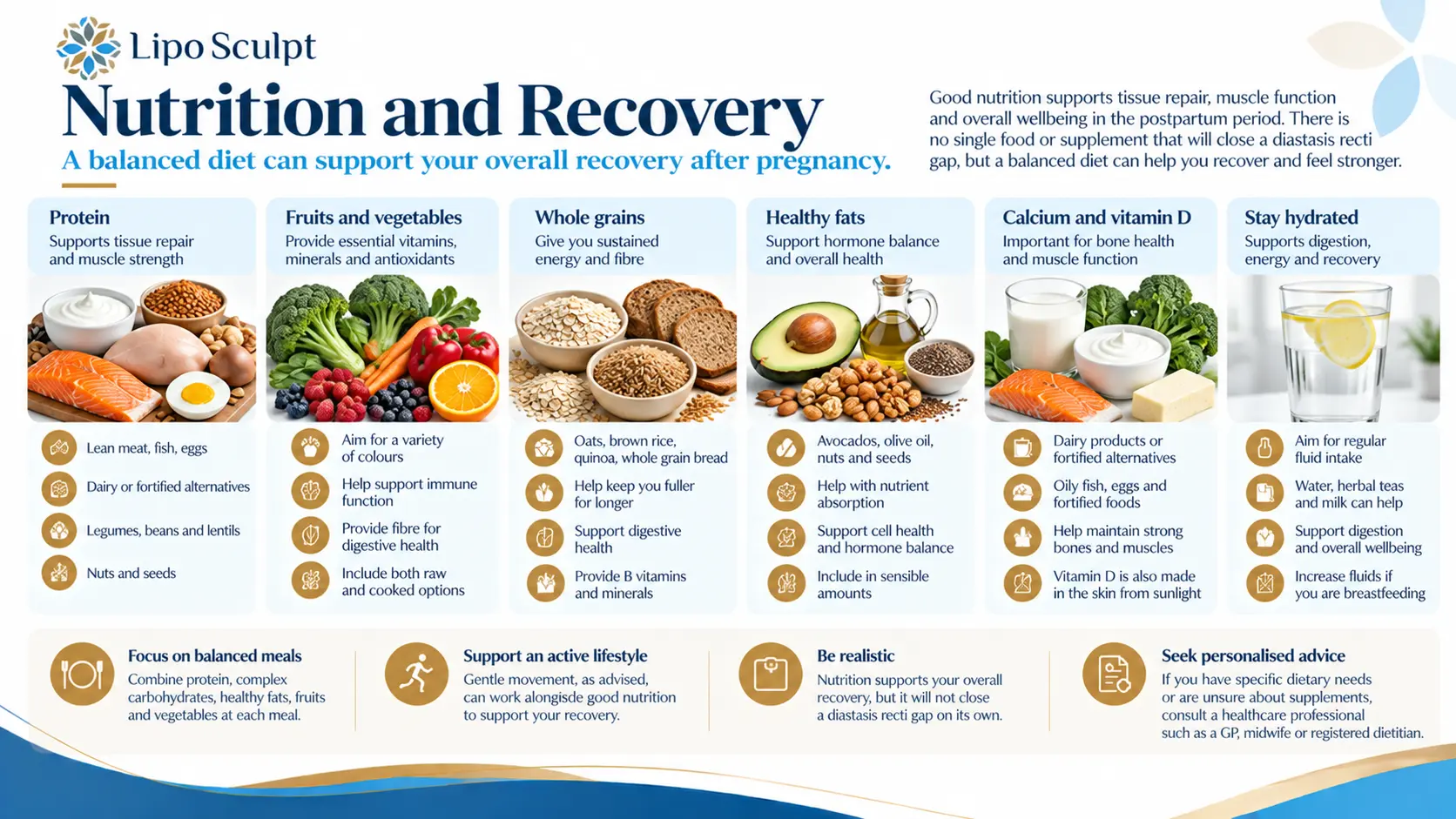
Nutrition supplies the energy and nutrients your body needs for normal physiological functions, tissue maintenance and recovery. It matters during pregnancy and after birth, but it should not be treated as a direct repair mechanism for diastasis recti.
There is no particular food, protein shake, supplement or meal plan that has been established as a stand-alone treatment for closing the abdominal gap.
What does a balanced diet look like?
| Nutrient or food group | Why it matters | Practical food sources |
|---|---|---|
| Protein | Supplies amino acids used in normal tissue maintenance and repair | Eggs, dairy products, beans, lentils, tofu, fish and appropriately cooked meat |
| Carbohydrates | Provide energy for daily activity | Oats, potatoes, rice, wholegrain bread and other grains |
| Unsaturated fats | Supply essential fatty acids and support normal bodily functions | Nuts, seeds, olive oil and suitable oily fish |
| Fruit and vegetables | Supply fibre, vitamins and minerals | A variety of fresh, frozen or appropriately prepared produce |
| Calcium-rich foods | Support bone health and other physiological functions | Milk, yoghurt, calcium-fortified alternatives and other suitable sources |
| Iron-rich foods | Help meet the body’s iron requirements | Meat, pulses, fortified cereals and leafy vegetables |
Pregnancy changes nutritional requirements, and individual needs can vary. A varied diet is a useful foundation, but women with dietary restrictions, persistent nausea, anaemia or other medical concerns may need tailored advice from a midwife, GP or registered dietitian.
Can eating more protein strengthen the abdominal wall?
Protein is important for normal tissue maintenance and repair, but there is no good evidence that consuming extra protein specifically closes the gap between the rectus muscles.
If your diet already meets your nutritional needs, more protein is not a proven diastasis recti treatment. Focus on an appropriate overall diet rather than a single nutrient marketed as a solution.
Can nutrition help with fatigue during pregnancy?
Feeling tired during pregnancy does not necessarily mean that you need more protein or a different diet. Sleep disruption, the physical demands of pregnancy and medical conditions can all contribute. Eating regularly and drinking enough may help you meet your body’s needs, but ongoing or unusually severe fatigue deserves attention. Speak with your midwife or GP, particularly if you also feel dizzy, unusually breathless or unwell.
Speak with your midwife or GP if fatigue is concerning, particularly if it occurs with breathlessness, dizziness or other symptoms. They can assess whether factors such as iron deficiency or another condition need attention.
Do supplements help repair diastasis recti?
No supplement has been established as a stand-alone treatment that repairs abdominal separation.
Pregnancy supplements may be recommended to meet specific nutritional needs, but they should not be marketed as treatments for diastasis recti. Avoid high-dose supplements or products making unsupported recovery claims without advice from an appropriate healthcare professional.
7. What happens to the abdominal muscles after birth?
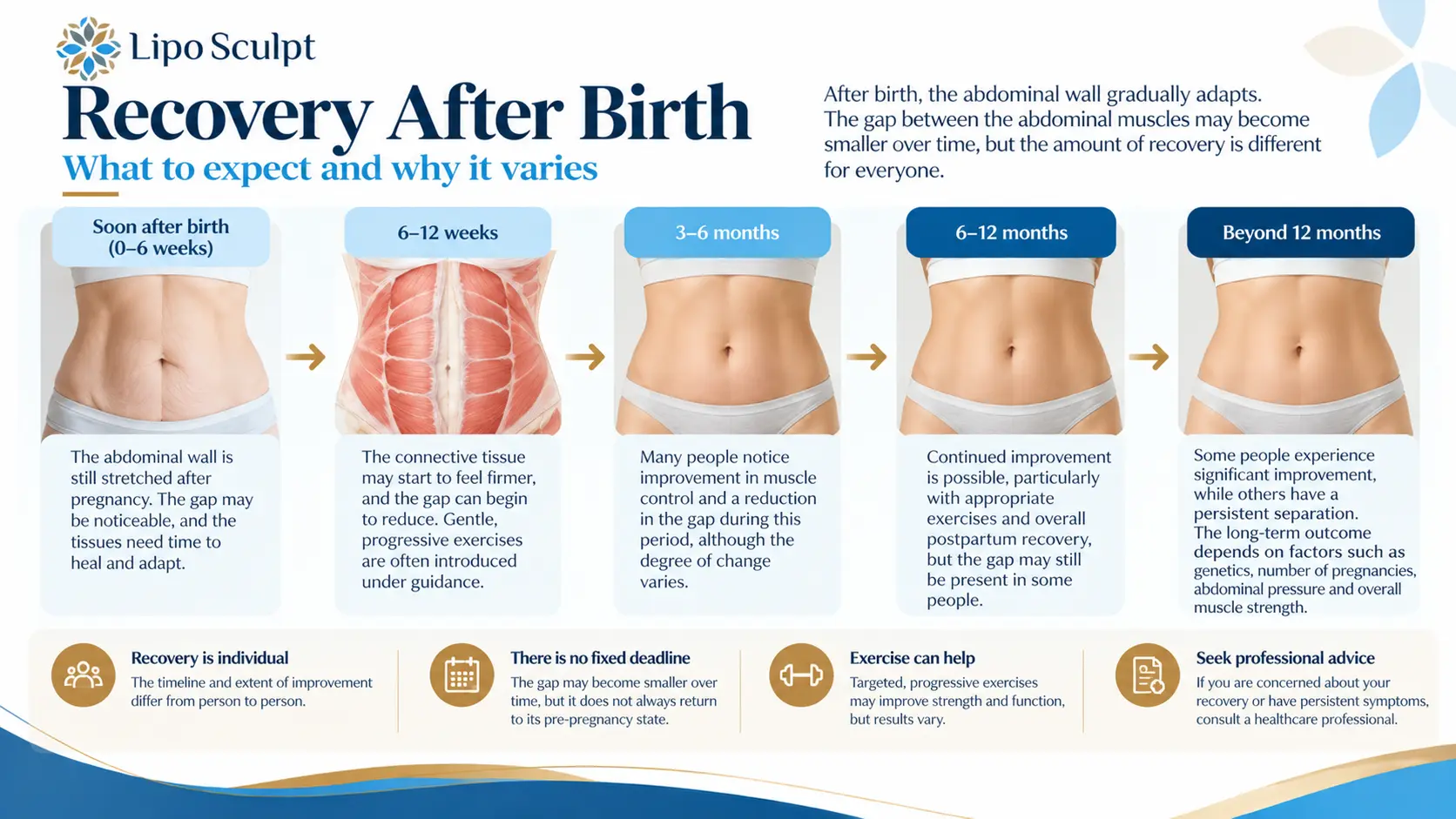
After delivery, the uterus gradually returns towards its pre-pregnancy size, and the abdominal wall continues to adapt. The muscles and connective tissue do not necessarily return to their previous condition immediately.
Abdominal separation often improves naturally after birth. The timing and extent of improvement vary, however, and a particular number of weeks does not guarantee that the gap or associated symptoms will have resolved.
Some women notice improvement without formal treatment. Others continue to experience a visible ridge, discomfort or difficulty returning to exercise and everyday activities.
These outcomes should be considered separately. A woman may have a persistent measurable gap without substantial functional problems, while another may need support with symptoms even if the measured separation is relatively small. Learn how often you can have skin tightening treatment sessions in Sutton, UK.
What should you focus on in the first weeks?
In the early weeks, focus on what your body can manage comfortably and what your maternity team has advised. That may mean taking short walks, gradually returning to everyday tasks, following guidance on lifting while you recover from childbirth, or addressing symptoms such as abdominal discomfort and urinary leakage. More demanding exercise can be introduced when your recovery and symptoms allow. If progress feels difficult or something does not seem right, ask your GP or a suitably qualified physiotherapist for an assessment.
Recovery won’t look the same for everyone. You might focus on a few things along the way:
- Get back to everyday activities at a pace that feels manageable.
- Follow your clinician’s advice about exercise, lifting and other physical demands.
- Start exercising again in stages, once you’re ready.
- Don’t ignore pelvic-floor problems or abdominal pain.
- If progress stalls or something doesn’t feel right, ask a healthcare professional to assess it.
There is no universal postpartum timetable that suits every woman. Returning to exercise should be based on medical safety, symptoms and functional readiness rather than a date alone.
8. What are common postpartum recovery mistakes?
Recovery advice can become unnecessarily restrictive when ordinary movements are labelled dangerous or every woman is given the same exercise rules. A more useful approach is to recognise what may need adjustment and when individual support is appropriate.
- Pushing exercise too quickly. If an exercise leaves you with more discomfort or makes movement harder afterwards, reduce the demand rather than forcing yourself to continue. Build up gradually as your recovery allows.
- Avoiding every abdominal exercise. You do not necessarily need to give up core training. The exercises that suit you depend on your symptoms, ability and stage of recovery; a physiotherapist can help if you are unsure where to start.
- Expecting recovery to follow a deadline. Your abdomen may continue to change for months after birth. If separation or related symptoms remain a concern, seek an assessment instead of judging your recovery against a particular week or month.
- Depending on a belly band to fix the gap. A band may make certain activities feel more comfortable, but wearing one does not establish that the connective tissue is healing or that abdominal function is improving.
- Looking to food or supplements for a quick fix. Eating enough and getting a varied range of nutrients supports your general health. There is no established diet or supplement that repairs diastasis recti on its own.
- Putting up with symptoms because separation is common. Persistent pain, difficulty with everyday tasks, urinary leakage or a noticeable bulge should not simply be dismissed as part of having a baby. A healthcare professional can help establish what is causing the problem and whether treatment would be useful.
Recovery is not a competition, and the aim is not to avoid every difficult movement. Pay attention to how you feel, adjust activities when necessary and get advice when a problem persists rather than trying to solve everything through exercise, diet or a support garment.
9. Do belly bands prevent or repair diastasis recti?
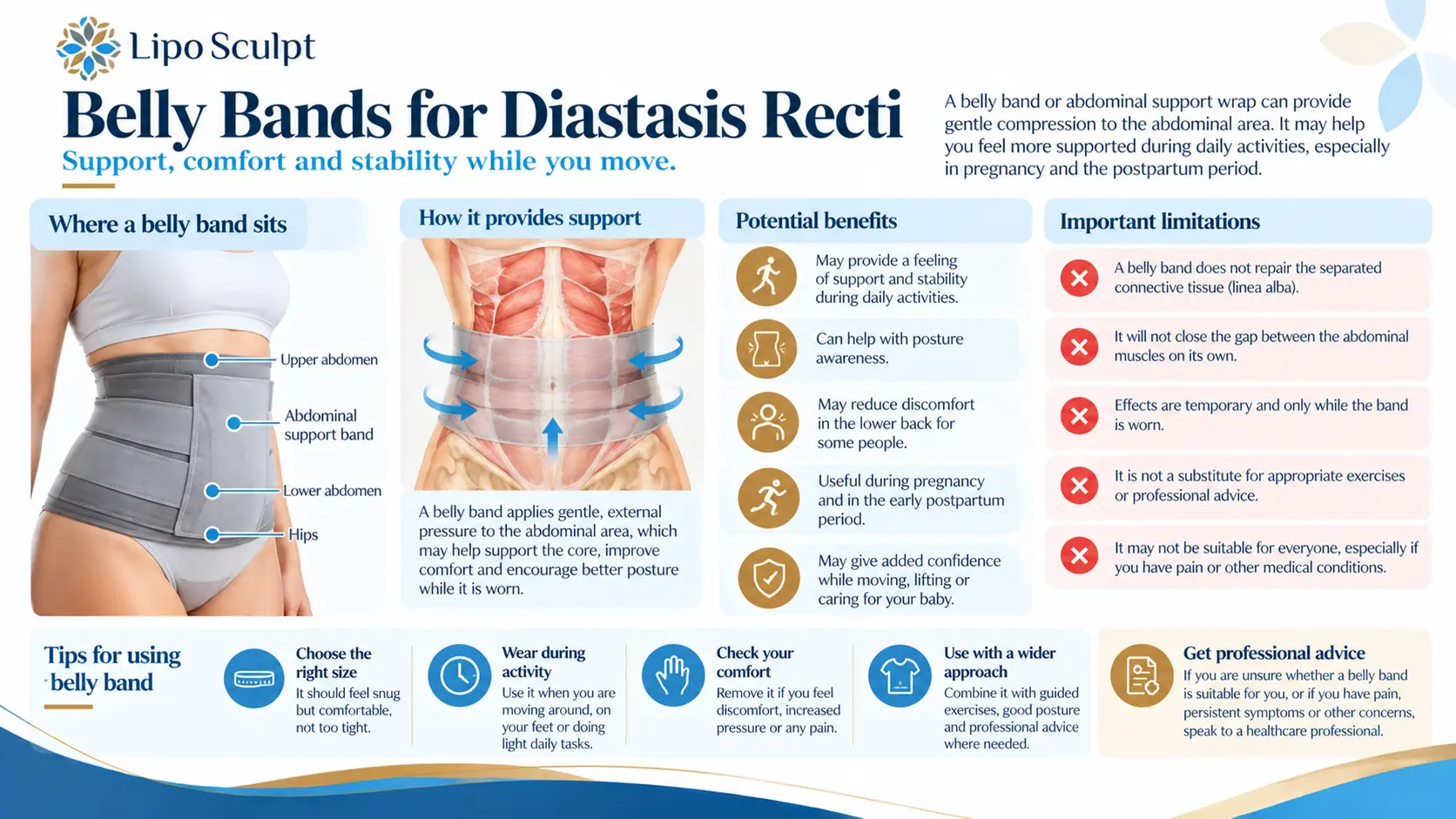
Belly bands, maternity support belts, postpartum wraps and abdominal binders are related products, but they are not identical. Their design and intended purpose vary.
Some women find external support comfortable during particular activities. A garment may also provide a sense of support during the early postpartum period. Those possible benefits should not be confused with evidence that a band prevents abdominal separation or permanently repairs the linea alba.
Studies have compared abdominal support garments with exercise, but they have not established that wearing a band on its own reliably treats diastasis recti. In a 2025 review of randomised trials, exercise reduced the measured separation at some abdominal measurement points compared with binding, while results at other points were less clear. The studies also did not show a consistent improvement in the functional measures examined. A band may still be useful for comfort or support in particular circumstances, but it should not be considered a replacement for assessment or rehabilitation when these are needed.
Belly band, postpartum wrap or abdominal binder?
| Product | General design | What to consider |
|---|---|---|
| Pregnancy support belt | Often designed to support the lower abdomen or pelvis during pregnancy | Suitability depends on comfort, fit and the reason for use. |
| Belly band | Usually a narrower elasticated band around the abdomen | May provide temporary external support; it is not a proven way to prevent separation. |
| Postpartum wrap | Often covers a broader area of the torso | Comfort and practical support vary by design. |
| Abdominal binder | A compression garment that may be recommended in particular postoperative or postpartum circumstances | Follow clinical guidance when it is recommended after surgery or for a specific medical reason. |
Can a belly band make the abdomen look flatter?
A compression garment can change the abdomen’s appearance while it is being worn. That does not demonstrate that the underlying separation has improved.
To assess recovery, consider symptoms, function and appropriate clinical assessment rather than relying on how the abdomen looks under compression.
Can a belly band make diastasis recti worse?
There is not enough evidence to claim that normal use of a belly band inevitably worsens diastasis recti or weakens the abdominal muscles. Equally, a band should not be treated as a proven way to restore muscle function.
An overly tight or uncomfortable garment may cause problems, and a band should not be used to push through pain or restrict normal breathing. If you experience discomfort, increased pressure or worsening symptoms, stop using it and seek appropriate advice.
How long should you wear a belly band each day?
There is no single evidence-based daily wear limit that applies to every type of band, every postpartum circumstance and every individual.
Follow the manufacturer’s instructions and any guidance provided by your clinician. If a band has been recommended after caesarean birth or another procedure, ask the treating team how and when it should be used.
The decision to stop using a band should depend on its purpose, comfort and clinical advice—not on a universal six-week or three-month deadline.
Are expensive belly bands more effective?
Price alone does not establish effectiveness for diastasis recti. Fit, comfort, suitability and the garment’s intended use are more useful considerations.
Before purchasing one, ask yourself what you want it to achieve. If the goal is temporary support, choose a comfortable garment suited to that purpose. If the goal is to close the abdominal gap, current evidence does not establish that buying a more expensive band will achieve it.
10. How do you know whether you need professional assessment?
![Diastasis Recti Treatment Options Guide from liposculpt {name]](/wp-content/uploads/2026/10/Diastasis-Recti-Treatment-Options-Guide-from-liposculpt-name.webp "Diastasis Recti During and After Pregnancy: Exercise, Prevention Myths & Recovery 11")
A gap between the abdominal muscles does not automatically mean that you need medical treatment. An assessment may help when symptoms persist, function is affected or you are uncertain about what you are experiencing.
A GP or appropriately qualified physiotherapist may consider:
- Your pregnancy and birth history.
- The location and extent of the separation.
- How the abdominal wall responds during movement.
- Pain, discomfort or difficulty with daily activities.
- Pelvic-floor symptoms, including urinary leakage or a feeling of heaviness.
- Whether another condition, such as an abdominal hernia, needs to be considered.
Should you check the gap yourself?
A self-check may help you notice a change, but finger-width measurements are not a reliable substitute for a professional assessment. They do not fully describe tissue tension, abdominal function or the cause of a bulge.
Avoid repeatedly testing the gap if doing so causes discomfort or anxiety. If you have a persistent concern, seek advice rather than relying on repeated home measurements.
When should you seek medical help?
Arrange an assessment if you have persistent separation accompanied by pain, ongoing abdominal bulging, pelvic-floor symptoms or difficulty returning to normal activities.
Seek urgent medical assessment for a sudden, severe or painful abdominal bulge, particularly if it is accompanied by vomiting, fever, significant abdominal pain or other acute symptoms. These may indicate a problem other than uncomplicated diastasis recti.
11. What treatment options are available for persistent diastasis recti?

The appropriate option depends on symptoms, function, the extent of the separation and your goals. There is no single treatment that is suitable for everyone.
Option 1: Physiotherapy and rehabilitation
If the separation is affecting your daily life, a women’s health physiotherapist can look at what happens when you move, lift, exercise or tighten your abdominal muscles. That assessment helps establish which movements you manage comfortably and where you might need more support.
Treatment may involve core exercises, breathing practice and pelvic-floor work if you have related symptoms. The exercises should be chosen for your circumstances and adjusted as your ability changes; there is no single routine that has been shown to work best for every woman.
Research has not settled how much physiotherapy can reduce the gap or which programme produces the best results. Some studies report a smaller separation after training, while others find little or no clear difference. Changes in the measurement also do not necessarily mean that pain, everyday function or quality of life will improve. Those outcomes need to be considered separately.
Option 2: Further medical assessment
A lump or bulge in your abdomen shouldn’t automatically be put down to diastasis recti. It could be a hernia instead, or you may have both. If it hurts, remains noticeable or affects what you can do day to day, get it checked by a healthcare professional. They’ll assess the bulge and help identify the cause.
Your GP can examine the area and decide whether you need further tests or a referral. Most people do not automatically need a scan; it may be useful if a hernia is suspected or the examination does not provide a clear answer.
Depending on the findings, you may need no further treatment, a course of physiotherapy or an opinion from a specialist. The decision rests on what the examination reveals and how the condition affects you, not simply on the width of the gap.
Option 3: Surgical assessment
Some people continue to have problems despite trying non-surgical treatment. If the separation affects daily life, discussing surgery with a specialist may make sense. There is no single gap measurement that, on its own, determines whether an operation is needed. The assessment should take account of symptoms, physical limitations, any co-existing hernia and the person’s general health and preferences.
Whether an operation is worth considering depends on how the condition affects you, whether a hernia is also present, your general health and what you hope to improve. A consultation with a surgeon can help establish which options are relevant to your situation.
During a consultation, ask what the proposed procedure would correct, what improvement is realistic, how long recovery may take and what complications are possible. It is also important to establish whether you have a hernia, since that can change the surgical approach.
The decision involves more than measuring the gap. Your symptoms, general health, previous treatment and plans for future pregnancies may all be relevant. A surgeon should explain the alternatives and help you weigh the potential benefits against the risks.
Option 4: Cosmetic body-contouring treatments
A flatter-looking abdomen does not necessarily mean the separation has been repaired. Before choosing a body-contouring treatment, check what the procedure has actually been shown to do. Evidence that a treatment changes muscle activity or appearance is not, on its own, evidence that it repairs the linea alba.
Before booking a procedure, ask the provider exactly what it is intended to achieve and what clinical evidence supports that claim. Find out about possible side effects, limitations and the need for further treatment. If you have a persistent bulge, pain or concerns about abdominal-wall function, obtain a medical assessment rather than relying on a cosmetic consultation alone.
The Lipo Sculpt Diastasis Recti Treatment page explains the service offered. Claims about a particular device should be supported by evidence relating to that device and the outcome being advertised. A change in muscle activation or abdominal appearance, by itself, does not demonstrate that the linea alba has been repaired.
12. Frequently asked questions about diastasis recti
Is diastasis recti normal during pregnancy?
Yes. As your baby grows, your abdominal wall stretches, and the muscles down the middle can move farther apart. This is common during pregnancy. After birth, the separation may reduce, but the extent of change differs from one person to another. It isn’t something you’ve necessarily caused by doing the wrong thing, and it doesn’t automatically mean you need treatment.
Should all abdominal exercises be avoided?
Is diastasis recti normal during pregnancy?
Yes. As your baby grows, your abdominal wall stretches, and the muscles down the middle can move farther apart. This is common during pregnancy. After birth, the separation may reduce, but the extent of change differs from one person to another. It isn’t something you’ve necessarily caused by doing the wrong thing, and it doesn’t automatically mean you need treatment.
Can a belly band close the abdominal gap?
A belly band may provide temporary external support, but it has not been established as a reliable stand-alone method for permanently closing the gap or repairing the linea alba.
Can diastasis recti affect the pelvic floor?
Abdominal and pelvic-floor function are related, and some women experience both abdominal separation and pelvic-floor symptoms. However, one condition does not automatically prove the presence or cause of the other. Persistent urinary leakage, pelvic heaviness or discomfort warrants appropriate assessment.
Can nutrition alone repair abdominal separation?
No specific food, high-protein diet or supplement has been established as a treatment that closes the gap between the abdominal muscles. Eating enough and getting a suitable range of nutrients supports general health and recovery, but persistent separation may need assessment and, where appropriate, a rehabilitation plan.
Can exercise prevent diastasis recti?
Exercise during pregnancy can support general health, but it has not been shown to guarantee prevention. After birth, some exercise programmes have reduced the measured gap in research studies, while other findings have been less conclusive. The benefit depends on the programme and the outcome being measured, so no particular routine should be presented as a guaranteed way to prevent or repair separation.
Does diastasis recti resolve on its own?
It often becomes less pronounced after birth, but not every woman’s separation resolves completely. If you feel well and can manage your usual activities, the gap alone may not require treatment. If it remains a concern or comes with pain, a persistent bulge or difficulty moving comfortably, arrange an assessment to discuss your options.
Is it too late to improve diastasis recti years after pregnancy?
Not necessarily. The time since childbirth alone does not determine whether rehabilitation may be useful. An assessment can help establish realistic goals based on current symptoms, function and individual circumstances.
Does a caesarean birth cause diastasis recti?
Abdominal separation develops in response to changes during pregnancy, so it can occur whether you give birth vaginally or by caesarean section. A caesarean birth does, however, involve surgical healing, which can affect when you can resume particular activities. Follow your maternity team’s advice on wound recovery and returning to exercise.
When should I see a GP or physiotherapist?
Arrange an assessment if the separation is accompanied by persistent pain, a bulge that concerns you, pelvic-floor symptoms or difficulty with everyday activities. If you are unsure whether a bulge is caused by diastasis recti or something else, a GP can assess it and decide whether further investigation or referral is needed.
References and further reading
The following sources support the clinical background and key recommendations in this guide. They are not a substitute for individual medical advice.
- NHS — Your post-pregnancy body. Guidance on abdominal separation after birth and postpartum recovery.
https://www.nhs.uk/baby/support-and-services/your-post-pregnancy-body/ - American College of Obstetricians and Gynecologists (ACOG) — Physical Activity and Exercise During Pregnancy and the Postpartum Period. Clinical guidance on activity, pregnancy-related considerations and postpartum exercise.
https://www.acog.org/clinical/clinical-guidance/committee-opinion/articles/2020/04/physical-activity-and-exercise-during-pregnancy-and-the-postpartum-period - Lyons G, Nogueira R, Viana SW, et al. (2026). What is the evidence for abdominal and pelvic floor muscle training to treat diastasis recti abdominis postpartum? An updated systematic review and meta-analysis of randomized clinical trials and trial sequential analysis. Hernia.
https://doi.org/10.1007/s10029-026-03660-4 - Capoccia Giovannini S, Hoffmann H, Bracale U, et al. (2026). Non-operative management of postpartum diastasis recti: a systematic review and meta-analysis of randomized controlled trials. Hernia.
https://doi.org/10.1007/s10029-026-03671-1 - Beamish NF, Davenport MH, Ali MU, et al. (2025). Impact of postpartum exercise on pelvic floor disorders and diastasis recti abdominis: a systematic review and meta-analysis. British Journal of Sports Medicine, 59, 562–575.
https://doi.org/10.1136/bjsports-2024-108619 - Bigdeli N, Yalfani A, Doosti-Irani A, et al. (2025). An evidence-based comparison of rehabilitation strategies for diastasis recti abdominis in postpartum women: a systematic review and network meta-analysis. Scientific Reports, 15, 39591.
https://doi.org/10.1038/s41598-025-22574-2 - Abdullah et al. (2025). Comparative Efficacy of Abdominal Exercises and Abdominal Binding on Diastasis Recti Abdominis Reduction in Postpartum Women: A Systematic Review and Meta-Analysis of Randomized Controlled Trials. Physiotherapy Research International, 30(2), e70038.
https://doi.org/10.1002/pri.70038 - NHS — Have a healthy diet in pregnancy. Practical guidance on balanced nutrition during pregnancy.
https://www.nhs.uk/pregnancy/keeping-well/have-a-healthy-diet/ - NHS — Exercise in pregnancy. Guidance on physical activity and relevant precautions.
https://www.nhs.uk/pregnancy/keeping-well/exercise/
Medical Disclaimer: This guide provides general educational information and does not diagnose diastasis recti or replace individual advice from a qualified healthcare professional. Pregnancy, postpartum recovery and treatment decisions should be assessed in light of the individual’s symptoms, medical history and circumstances.